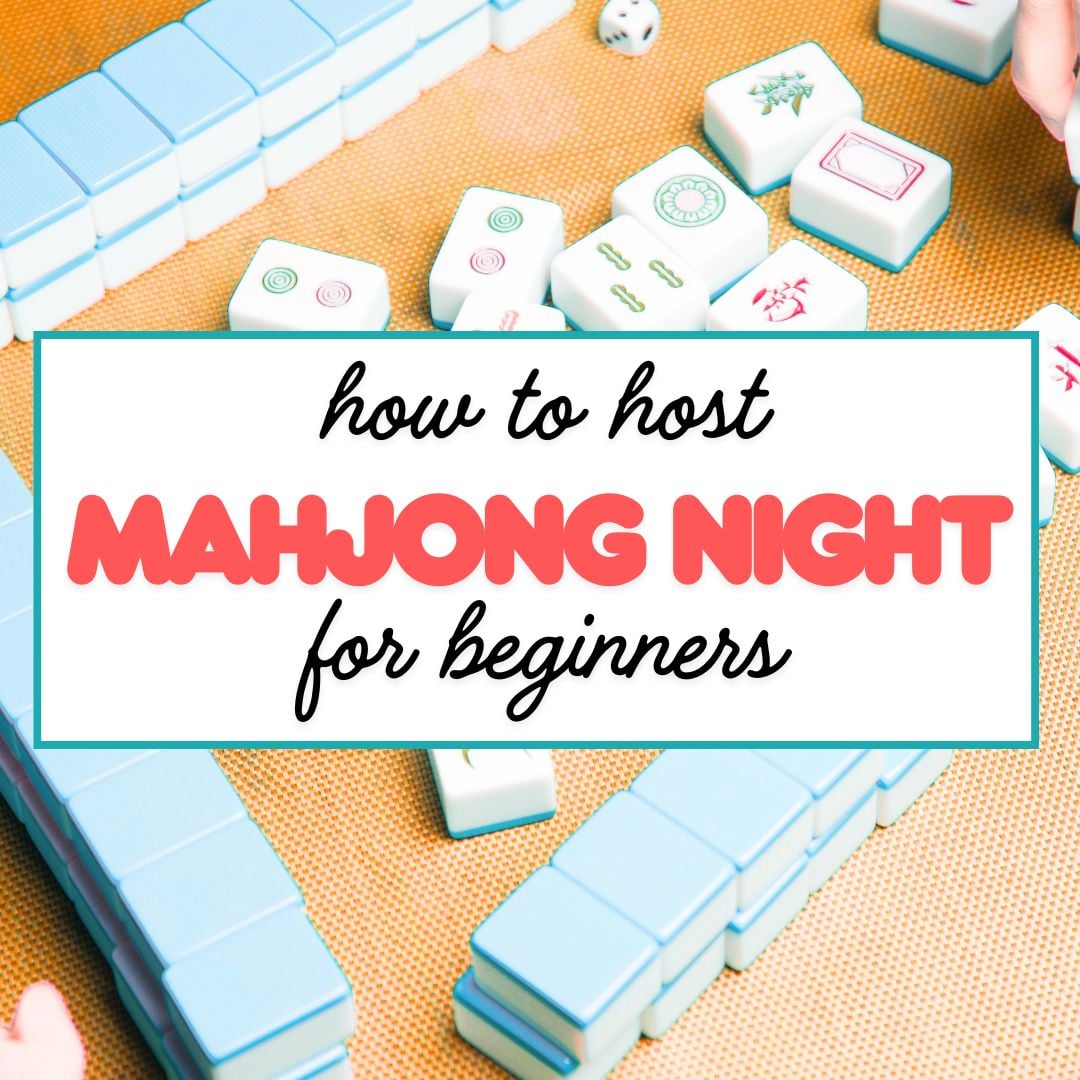
How to Host Mahjong Night When Everyone Is Still Learning
Hosting mahjong night sounds very chic and put-together.
Until you remember that everyone is still learning, nobody fully understands the card yet, and at least one person is going to ask, “Wait, can I do that?” every five minutes.
Honestly? That is part of the fun.
You do not have to be a mahjong expert to host a great mahjong night. You just need a table, a set of tiles, a few snacks, and a group of people who are willing to laugh their way through the learning curve.
If you are new to mahjong but love the idea of turning it into a cute girls’ night, this guide will help you host a low-pressure, beginner-friendly mahjong night that feels fun instead of intimidating.
Keep the Guest List Small
For your first mahjong night, smaller is better.
A standard mahjong table works well with four players, so you can keep it simple with one table of four. If you have more people who want to join, you can create a second table, let people rotate in, or make it more of a social learning night.
If everyone is brand new, starting with four people is usually easiest. It gives everyone room to ask questions, slow down, and actually understand what is happening.
You can always make it bigger once your group gets more comfortable.
Make It Clear That It’s Beginner-Friendly
This is the most important part.
Tell everyone ahead of time that the night is casual and beginner-friendly. Nobody needs to show up as an expert. Nobody needs to memorize everything before they arrive.
You can say something like:
“We are all learning, so this is going to be very low-pressure.”
That one sentence takes so much of the stress away.
A beginner mahjong night should not feel like walking into a tournament. It should feel like hanging out with friends while slowly figuring out a game together.
Decide What Version You’re Playing
Before game night, decide what style of mahjong your group is playing.
A lot of social groups in the United States play American mahjong, which usually uses a yearly card. Other groups may play different versions, depending on family traditions, local groups, or who is teaching.
You do not need to explain every version to your guests. Just make sure everyone knows which one your table is using so people are not trying to learn five different things at once.
If you are learning from a friend, ask them what version they play and what supplies you need.
Gather the Basic Mahjong Supplies
You do not need a perfect setup to host, but it helps to have the basics ready before guests arrive.
For a beginner mahjong night, you may need:
A mahjong tile set
Racks and pushers, if your set uses them
A table large enough for four players
A table mat or cover
A scorecard or mahjong card, if needed
Pens or pencils
A beginner cheat sheet
Small bowls or trays for snacks
Napkins and drinks
If you are brand new, you do not need to buy every cute accessory right away. Start with the essentials, then add the pretty extras later.
That said, cute napkins do make everything feel more official.
Set Up the Table Before Guests Arrive
This is one of those little things that makes the whole night feel smoother.
Set out the tiles, racks, cards, and chairs before everyone gets there. Make sure there is enough room for drinks and snacks nearby, but not directly in the middle of the playing area.
If you are using a table cover or mahjong mat, lay it out ahead of time. It helps define the game space and makes the table feel intentional.
You do not need a fancy setup. A clean table, good lighting, and enough elbow room will do a lot.
🀄 More Mahjong Night Ideas
Keep the Snacks Close, But Not Too Close
Snacks are essential.
Crumbs in the tiles are not.
Set up your food on a side table if possible. This keeps the game table clear and helps avoid sticky fingers, greasy tiles, and accidental spills.
The best mahjong night snacks are easy to grab, not too messy, and simple to eat between turns. Think fruit skewers, cheese cubes, pinwheels, mini sandwiches, veggie cups, and chocolate-covered strawberries.
Avoid anything super powdery, flaky, saucy, or greasy near the tiles.
Because powdered donut dust and mahjong racks are not friends.
Serve Simple Drinks
Drinks do not need to be complicated.
You can do wine, sparkling water, iced tea, lemonade, mocktails, or a simple pitcher drink. The goal is easy and cute, not bartender-level effort.
If you are serving drinks at the table, use cups or glasses that are hard to tip over. Stemless glasses, tumblers, or lidded cups can be helpful if your group gets animated.
You can also set up a small drink station away from the table so people can refill without crowding the game area.
Add a Few Cute Touches
You do not have to decorate your whole house for mahjong night.
A few small touches are enough.
Try:
Cute cocktail napkins
A small snack board
A table runner or pretty tablecloth
A simple flower arrangement
Colorful cups
A little dessert tray
A bowl of mints or chocolates
Printed scorecards or cheat sheets
The goal is to make the night feel special without making it feel like a full event.
Mahjong already has a lot of personality. You can keep the rest simple.
Have a Beginner Cheat Sheet Ready
If everyone is learning, a cheat sheet can save the night.
Print or write out the basics your group keeps forgetting. This might include turn order, common terms, what to do when someone calls a tile, or any beginner notes from the person teaching you.
You do not need a giant packet. In fact, shorter is better.
A one-page cheat sheet gives people something to glance at without stopping the whole game every two minutes.
And if your group still asks the same question twelve times, that is normal.
Let the First Round Be Practice
The first round does not need to count.
Actually, it probably should not.
Let everyone get used to the tiles, the flow of the game, and the basic rhythm before anyone worries about winning.
You can say:
“Let’s make the first round a practice round.”
That gives people permission to ask questions, make mistakes, and learn as they go.
Beginner game nights are more fun when nobody feels embarrassed for not knowing something yet.
Choose One Person to Help Guide the Game
If one person in your group knows a little more than everyone else, let them be the unofficial guide.
They do not have to teach a formal class. They can just help keep things moving, answer questions, and explain what is happening when people get stuck.
If nobody knows what they are doing, that is okay too. You can watch a quick tutorial together, use a beginner guide, or learn from a printed set of rules.
It may be chaotic, but it will probably be funny.
Keep the Mood Light
The biggest mistake you can make at a beginner mahjong night is taking it too seriously.
People are going to forget rules. Someone will probably pick up the wrong tile. Someone will absolutely stare at their card like it contains ancient secrets.
That is the learning curve.
Keep the mood light and remind everyone that the goal is to have fun together. Winning is nice, but laughing through the confusion is honestly the better part of a first mahjong night.
Plan for More Time Than You Think
Mahjong takes longer when everyone is learning.
Do not try to squeeze your first game night into a tiny window. Give yourself extra time for snacks, questions, setup, and practice rounds.
A relaxed evening works better than a rushed one.
If you only get through a few rounds, that is still a win. The point of the first night is to get comfortable enough that people want to come back and play again.
Don’t Overexplain Everything at Once
It is tempting to explain the whole game before anyone touches a tile.
Try not to.
Most people learn better by playing. Give a basic overview, start slowly, and explain things as they come up.
If you explain every rule, exception, and strategy tip at the beginning, everyone’s eyes may glaze over before the game even starts.
Start with just enough information to begin.
The rest will make more sense once people are actually playing.
Make It a Recurring Night
The best way to learn mahjong is to keep playing.
If everyone has fun, talk about making it a regular thing. It could be once a month, every other week, or whenever your group can make it work.
A recurring mahjong night gives everyone something to look forward to, and it makes the learning process feel less rushed.
You do not have to master it in one night.
You just have to enjoy it enough to play again.
Easy Beginner Mahjong Night Checklist
Here is a simple checklist to help you host your first night:
Choose a date
Invite three to five people
Tell everyone it is beginner-friendly
Decide what version of mahjong you are playing
Set up the table before guests arrive
Have the tiles, racks, cards, and cheat sheets ready
Serve easy, low-mess snacks
Set drinks away from the main playing area
Make the first round a practice round
Keep the mood casual
Plan the next game night before everyone leaves
That is really all you need.
You do not need to be an expert. You do not need a perfect setup. You do not need to have every rule memorized.
You just need a group that is willing to learn together.
A Few Last Tips Before You Host
Hosting mahjong night when everyone is still learning can actually be more fun than hosting for people who already know exactly what they are doing.
There is less pressure. More laughter. More “wait, what just happened?” energy.
And that is kind of the whole point.
Make the night cute, keep the snacks easy, and let everyone be a beginner.
The goal is not to host the most perfect mahjong night ever.
The goal is to create the kind of night your friends want to do again.
Read Next
21 Easy Mahjong Night Snacks That Won’t Get Crumbs in the Tiles
Everything I Didn’t Know I Needed for Mahjong Night
Cute Game Night Ideas for a Girls’ Night In
Easy Ladies’ Night Snacks That Feel Fun But Not Fussy
What to Serve at Game Night When You Don’t Want a Mess